Introducing G. Milton Cohen, Board Advisor
I joined the Advisory Board at Villari almost a year ago. Looking back, I’ve recognized that Lon and the Villari team have the same strong sense of mission and purpose we have at Safe Rx, and that recognition compelled me to look back even further and consider the origin of our own mission — one I think Villari’s village will understand better than most.
Looking Back
I was 32 on September 11, 2001, a day that altered the course of lives around the world and came back again to alter my own life over a decade later. I’ll never forget the non-stop exodus of dust-covered people walking north, shoulder-to-shoulder across the width of Lafayette Street. I was looking down from our air-conditioned conference room window, my gaze shifting from the people covered in dust below, to the images on our TV across the room, and to the new loafers on my feet.
All of us watching that day felt lost, but I was only ten blocks away, and I let my new loafers become my excuse for not walking south to help. As the stories accumulated over the next week — of others going down to help, of the last phone calls between loved ones, of the actions of passengers and crew on Flight 93, of NATO invoking Article 5 for the first time in history — my guilt festered.
My mother had raised a polite and considerate young man. My World War II grandfather had instilled in me his generation’s commitment to individual sacrifice for the common good. My coaches throughout high school and college reinforced it all.
And yet, when it mattered that day, I couldn’t fill my younger self’s shoes.
Second Chance
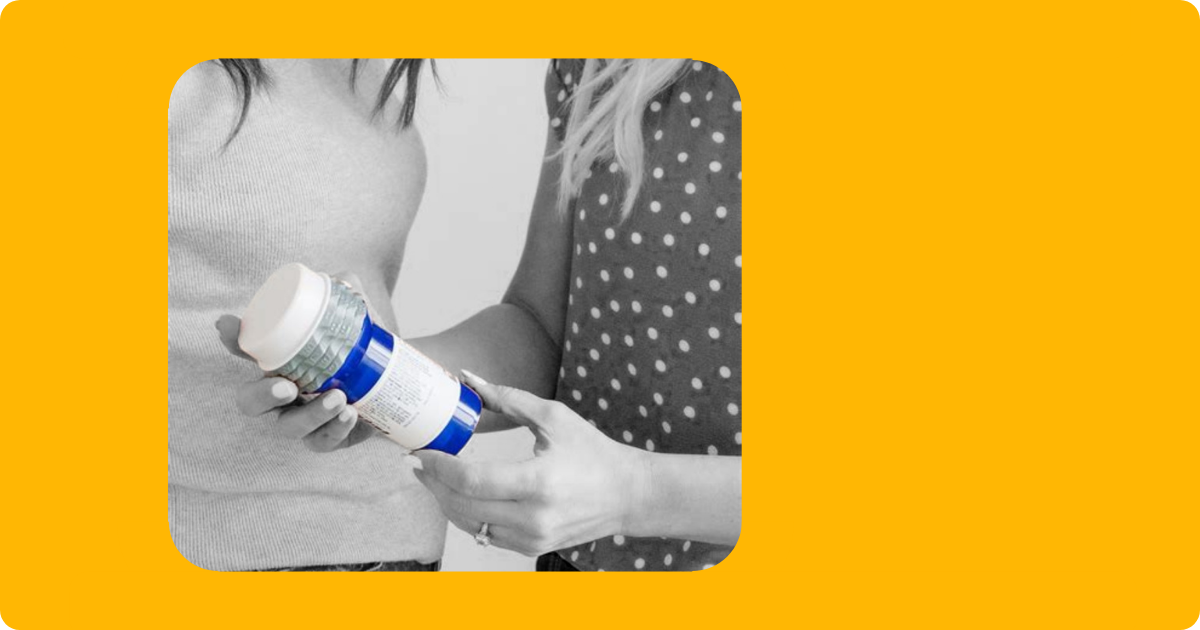
Many years later, I met the inventor of our Safe Rx locking prescription vial product. He was a practicing physician who had witnessed the opioid epidemic firsthand in the ER, treating teens who had overdosed on the same pills he had to keep under double lock and key in the hospital, per DEA security protocols. He’d spent six years and hundreds of thousands of dollars prototyping a locking vial that we now know cuts 75% of diversion after the pharmacy, where DEA security controls lapse.
I hadn’t been paying close attention to the opioid epidemic, despite having a significant story in my own extended family. But I soon learned that by that point, over half a million Americans had lost their lives, and millions more had lost their way. The equivalent of a September 11th was happening every week in our country, right under our noses, and I had a second chance at the opportunity I’d missed, standing at that conference room window years earlier.
The people closest to a problem are often the ones left to solve it, quietly, without any help from the existing systems meant to protect them. That conviction is exactly what drew me to Villari.
Showing Up
Soon I’d shown the prototype to colleagues, friends, and my sixth-grade daughter, who told me she’d seen other kids trading pills on the school bus. That was enough to send me into my own research. I learned that the Bloomberg School at Johns Hopkins, in a landmark 2015 report, had identified the medicine cabinet as a root source of the epidemic, and more secure packaging as a key solution. A contributing expert at Vanderbilt Medicine put it simply: when your boat is sinking, you find and plug the hole first, and only then start bailing. Our ship was capsizing because everybody was bailing and nobody was plugging the hole.
I found myself alternating between anger and disappointment that our government and health care system hadn’t done anything about it — and that was enough to get the business started.
Building the Business
Commercializing a product isn’t easy, particularly in U.S. healthcare. Like all young, growing companies, we’ve experienced our share of adversity. Our initial strategy — pushing to update the 1970 child-resistant packaging regulations — didn’t work; we’d line up sponsors and legislation and get everyone on board, yet time and again, politics trumped policy.
When we finally switched to a commercial strategy, we had real wins in our first year, landing two large health systems plus Walmart and Target nationally. Then, just when we thought our luck had changed, COVID displaced us from all of them. The health systems dropped implementation overnight, and Walmart and Target replaced us with masks and hand sanitizer the very next year.
We rebuilt. That’s the part of the story that matters more than the setback: not that we got knocked down, but that we kept going; the mission was bigger than any single contract.
A Mission for Protection
Today at Safe Rx, we measure and report mission statistics to our employees every month and to our investors every quarter. Every other month, we host an outside speaker with a personal story of the epidemic at our team meetings — to remind us of our mission, refresh our resolve, and refuel our passion.
Externally, we report those same statistics to our customers for their own programs, which they in turn share with their stakeholders. I’m confident that together, we’ll ultimately create a world where teens don’t find addiction in our medicine cabinets, and where children are never poisoned again.
That conviction — that the people closest to a problem are often the ones left to solve it, quietly, without any help from the existing systems meant to protect them — is exactly what drew me to Villari.
Villari + Safe Rx
Our mission to protect children and teens at Safe Rx parallels Villari’s mission to protect our seniors. We may protect different groups from different dangers, but we’re both pushing uphill toward the same kind of finish line, and Lon and his team’s resolve at Villari reinforces our own at Safe Rx.