
Every scam needs a door.
Villari makes sure it never opens.
Villari blocks threats at the moment your device asks for directions — before anything dangerous can appear on screen.
Protection lives at the network level. There's nothing to update, nothing to remember to turn on.
Villari sees where a device is trying to go, not what anyone types, reads, or sends.
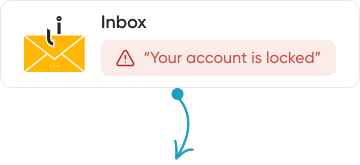
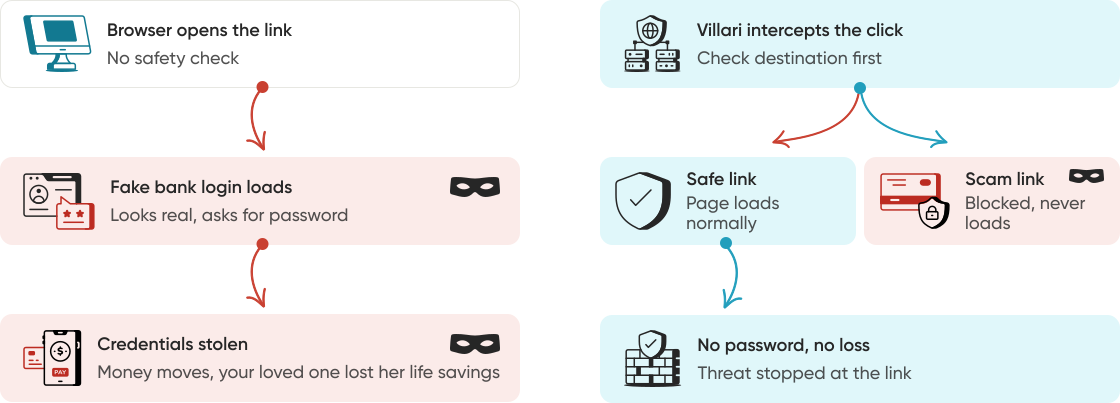
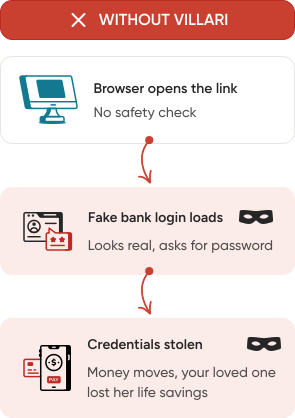
Villari doesn’t stop the email. It stops what happens next.



Your device asks for directions thousands of times a day. You just never knew it.
Every time someone visits a website — any website — their device doesn’t go there directly. First, it asks for directions.
It sends a question to a directory service that translates a human-readable name, like a bank’s website or a news page, into the machine-readable address that makes the connection happen. That system is called DNS — the domain name system. It’s invisible. It’s nearly instantaneous. And it happens in the background every single time someone goes online.
Most people never think about it. Scammers think about little else.
Every fake site, every phishing link, every scam page — they all have an address too.
When someone clicks a link in a text message, taps a search result, or even miskeys a familiar URL, their device goes through that same DNS directory first. It asks. It gets an answer. And off it goes — straight into whatever is waiting on the other side.
That moment, between the click and the page loading, is the only moment that matters for protection. Once a scam page has finished loading, it’s already done its job. The user has seen it. Trusted it. Maybe entered something.
Villari acts before that moment.
Villari sits at the only moment that counts.
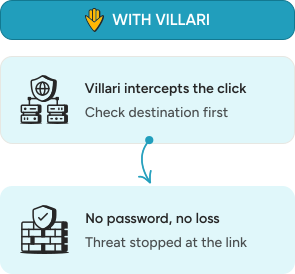
When Villari is installed on a device, it quietly changes where that device sends its DNS questions. Instead of asking your internet provider for directions, it asks Villari first.
Every request passes through Villari’s continuously updated threat intelligence layer before anything resolves. If the destination is legitimate, nothing happens. The request goes through normally, and the person using the device never notices a thing.
If the destination is known to be malicious — a phishing page, a gift card scam, a fake tech support site — Villari simply doesn’t give the device directions. The connection never opens. The page never loads. The threat never materializes.
Not filtered. Not flagged for review. Just gone.
Protection that doesn't ask anything of the person being protected.
There’s no button to press. No alert to acknowledge. No behavior to change. Your loved one uses their device exactly the way they always have. Villari works in the background, at a level they’ll never see, which is exactly the point.
The goal isn’t to make them feel watched. It’s to make sure the internet they’re navigating is actually as safe as it looks.
Guardrails, not surveillance

- The address a device is trying to reach
- The timestamp of the request
- Whether that address is a known threat

- Emails or messages
- Search terms or browsing content
- Anything typed into a website
- Photos, files, or personal data
- Conversations of any kind
Villari operates at the DNS layer — which means it sees destinations, not behavior. Not content. It’s the same information your internet provider uses to route your traffic, and we use it for exactly one purpose: to check whether where you’re going is safe.
Your loved one’s private life stays private. That’s not a feature. It’s a boundary we chose to build around.
How we handle your data
Protection they won't notice.
Peace of mind you will.
Villari was built for families like ours — families where someone got hurt, and where we wished there had been a quiet, competent layer of protection in place before it happened.
Digital scams don’t target ignorance. They target trust, timing, and the moments when anyone’s guard is down. The protection that works is the kind that’s already there.
That’s what Villari is.